
Key facts
- The longest-running climate talks in history came to a disappointing conclusion on Sunday.1
- Saudi Arabia and Russia wanted the words “fossil fuels” omitted from the text, while around 130 parties called for their reintroduction.1
- The European Union is reportedly the world’s largest provider of climate finance and reportedly refused to negotiate on providing additional finance.1
The longest-running climate talks in history came to a disappointing conclusion on Sunday as negotiators failed to come to an agreement on a shared political direction on climate change.1
After two days of extended talks, representatives from country after country, tiredness etched into each face, voiced their opposition to the “Antalya Pact.”1
Fossil fuels as a sticking point
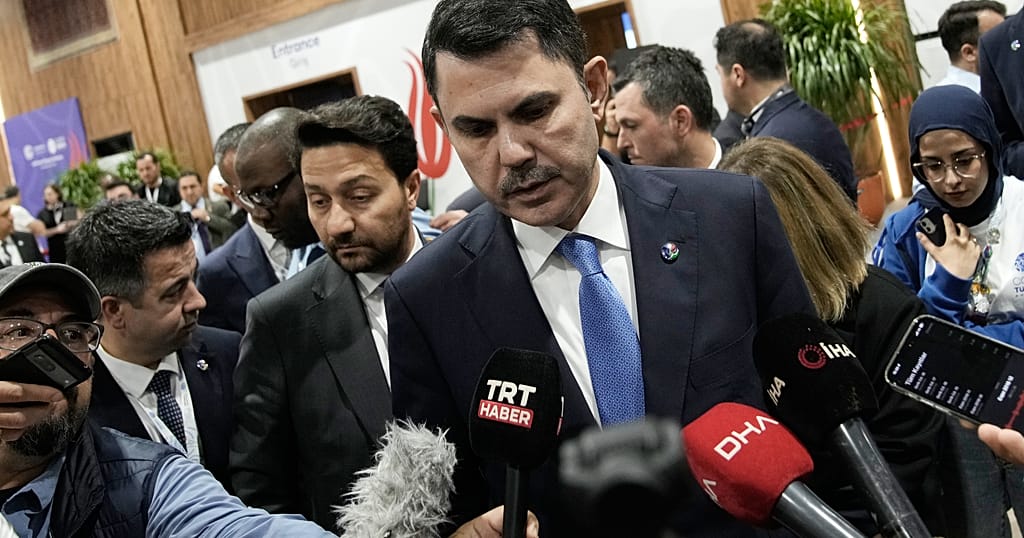
Murat Kurum, Turkish president of the COP31 climate summit, said, “I understand that there is no agreement on this text. For that reason, these decisions have not been adopted.”1
Fossil fuels were one of the main sticking points..1 While some nations, including petrostates like Saudi Arabia and Russia, wanted them omitted from the text, others saw it as a “step backwards” not to include them.1
Around 130 parties — among them vulnerable island nations, developing countries and richer EU members — called for the reintroduction of the two words into the text, to no avail.1
Climate finance and the 1.5-degree threshold
The lack of agreement was not solely about fossil fuels; money also played a part..1 Developing nations have long argued that they need additional financing, both as a means for them to move away from coal, oil and gas, but also to help them cope with the consequences of rising temperatures.1
Catastrophes like flooding, drought and wildfires have been fueled and worsened by rising global temperatures..1 Often the worst hit are poorer countries with low rates of greenhouse gas emissions.1
Dissatisfaction at home due to higher food and fuel prices has left many governments loathe to pay more to finance climate action abroad.1
Nikki Reisch, director of the climate and energy program at the Center for International Environmental Law, said.1
Fanny Petitbon, policy analyst at 350.org, said in a statement.1
Moving forward
With the United States , the world’s biggest historical emitter , now absent from negotiations and on the verge of leaving the United Nation’s Framework Convention on Climate Change, the European Union was portrayed as this year’s villain with some observers accusing the EU of hypocrisy.1
As the world’s largest provider of climate finance, the EU reportedly refused to negotiate on providing additional finance and has repeatedly called for other nations to step up.1
The COP31 climate summit in Antalya, Türkiye, collapsed without an overarching agreement after governments failed to bridge deep divisions over the transition away from fossil fuels, climate finance and the response to the projected overshoot of the Paris Agreement’s 1.5°C temperature goal.2